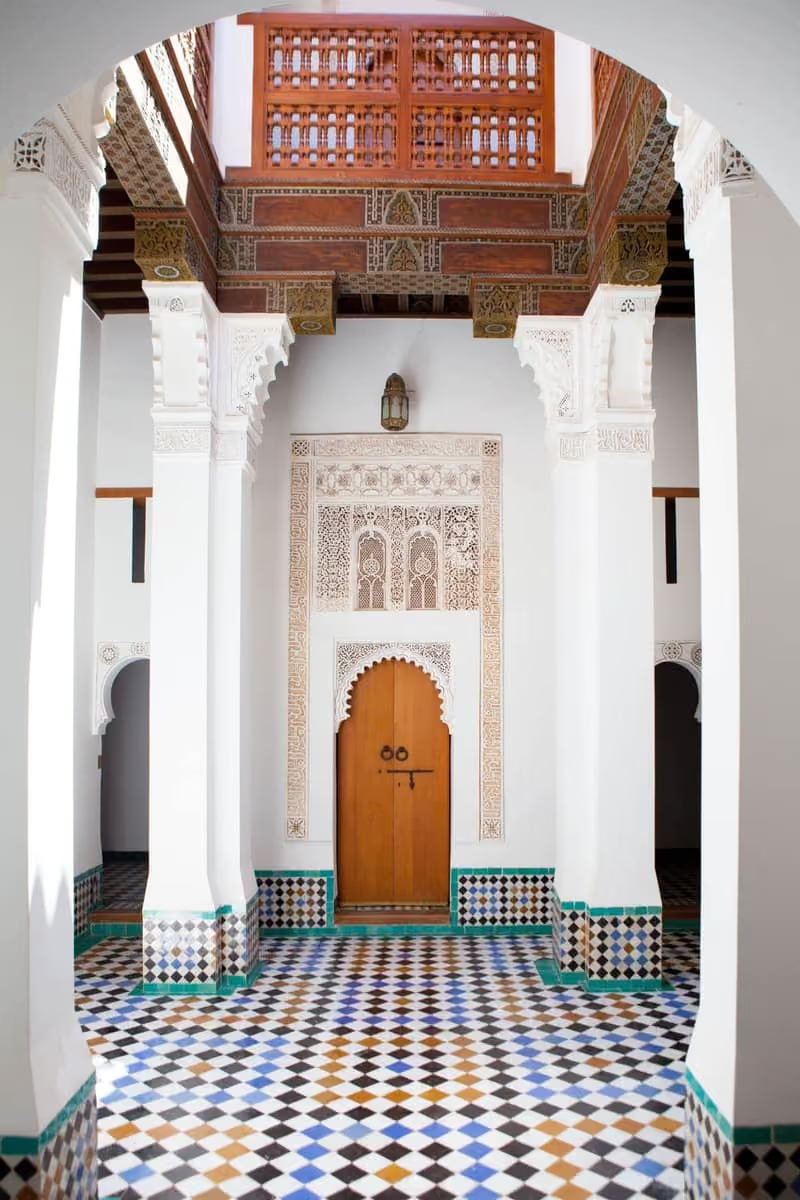
Why marble dulls so fast in Agadir
Agadir stacks the worst enemies of marble: salt air (whitish haze on terraces), hard water (limescale marks in bathrooms and around pools), sand (micro-scratches from dry sweeping). A floor installed new turns matte in 2–3 years without the right maintenance.
Polish, grinding, crystallization: three different things
- Polish (product) lays down a shiny film: instant effect, but slippery and short-lived — dust sticks to it and the haze returns.
- Diamond grinding removes material through progressively finer abrasion: it eliminates scratches and set-in stains, then refines the surface.
- Crystallization reacts chemically with the stone’s calcium: the surface densifies and shines through the mass, with no film. This is the treatment that lasts.
The right result comes from the full sequence: diamond grinding then crystallization — never crystallization alone on a scratched floor.
How the job runs
- Diagnosis: stone type (true marble, travertine, terrazzo), scratch depth, previous treatments.
- Protection of furniture and skirting.
- Diamond grinding with decreasing grits, wet extraction.
- Crystallization under a single-disc machine with dedicated powder.
- Gloss-meter test, before/after photos, and a recommended care calendar (mild descaling, no vinegar, no bleach).
Where it matters most
- Villas and riads: reception floors and stairs;
- Hotels and short-let riads: lobbies seen by every guest;
- Cafés and boutiques: high-traffic floors, salt-hazed terraces.
The full scope (gloss test included) is on the marble cleaning and crystallization page.
Recommended frequency
Non-abrasive daily care + an annual maintenance crystallization (twice a year for high-traffic lobbies) keeps the mirror effect. For a quote: WhatsApp, reply within 24 h.